

21 May Warren Buffett’s Advice: What Business Owners Should Know Before Investing in Real Estate
Warren Buffett’s Advice: What Business Owners Should Know Before Investing in Real Estate
Introduction
Warren Buffett, often referred to as the “Oracle of Omaha,” is one of the most successful investors in history. With a track record built on patience, value investing, and clear business fundamentals, his advice is often gold—especially for business owners considering diversifying into real estate. While Buffett is famously cautious about investing directly in real estate, his overarching investment philosophy offers invaluable guidance.
This guide breaks down Warren Buffett’s most relevant principles and explains what business owners should understand before stepping into the world of property investments.
1. Understand Your Circle of Competence
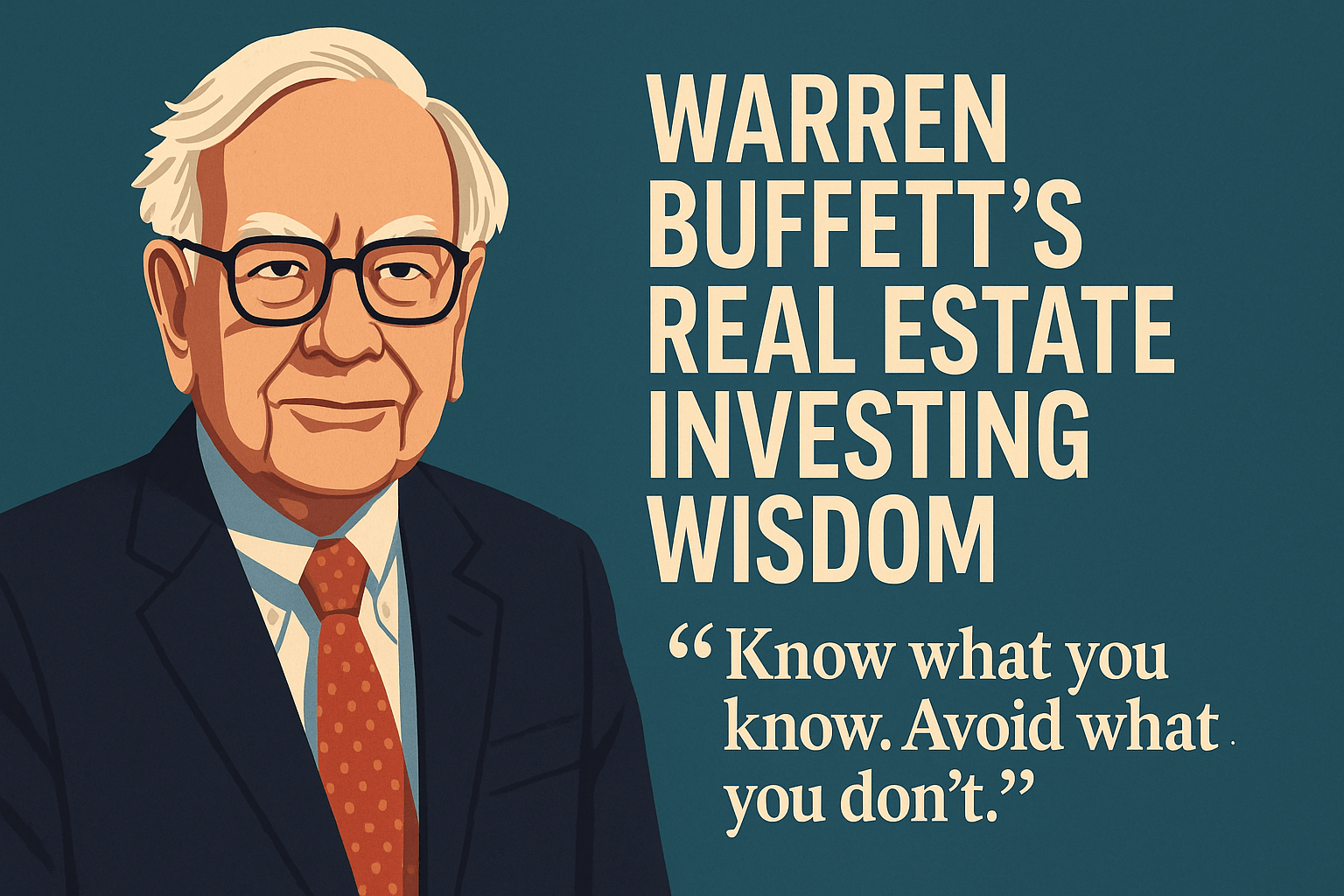
Warren Buffett stresses knowing what you know—and more importantly, knowing what you don’t. For business owners, diving into real estate investment without understanding the landscape is a risk. It’s essential to conduct market research, study property valuation, and learn the dynamics of commercial real estate.
“Risk comes from not knowing what you’re doing.” – Warren Buffett
2. Think Long-Term, Not Short-Term
Buffett has always prioritized long-term investment strategies over chasing short-term gains. Real estate is a classic example of an asset class that compounds in value over time. Business owners must align their investment mindset to seek capital appreciation and passive income rather than speculative returns.
3. Focus on Cash Flow, Not Just Appreciation
Buffett prefers businesses (and investments) that produce consistent cash flow. In real estate, this translates into rental income, occupancy rates, and effective property management. Always analyze the cash flow management of a property to ensure it supports your business’s financial health.
4. Beware of Leverage and Debt
While leverage can amplify returns, Buffett warns about excessive debt. Many real estate investors overextend themselves with mortgage leverage, which can backfire in a downturn. For business owners, using profits wisely and ensuring financial literacy in investment decisions is key.
5. Location Still Matters
Buffett might not comment directly on neighborhoods, but his principles apply. Location analysis is vital. Look for economic indicators like job growth, population trends, and development potential when choosing a property.
6. Treat Real Estate as a Business, Not a Hobby
One of Buffett’s strongest traits is his commitment to treating investments like businesses. The same applies to property acquisition. If you’re investing in real estate ventures, approach them with structure, planning, and systems in place—just like you do with your primary business.
7. Know the Opportunity Cost
Every dollar you put into real estate is one you’re not investing in your own company. Buffett often asks, “What else could you be doing with this capital?” Conduct a thorough cost-benefit analysis and compare real estate returns to reinvesting in your business growth.
8. Diversify—but Don’t Over-Diversify
Buffett believes in focused diversification. For a business owner, this could mean allocating part of your capital into real estate diversification—but not spreading so thin that you lose focus. Maintain a balance between core operations and new investment avenues.
9. Watch Out for Overvalued Markets
Buffett waits patiently for value. Real estate is often hyped, especially in bullish markets. Look beyond marketing buzz and rely on property appraisal, economic outlook, and real estate trends before making a decision.
10. Factor in Taxes
Real estate offers significant tax advantages like depreciation, 1031 exchanges, and deductions. These can enhance overall ROI—but only if understood and applied correctly. Consulting a tax advisor with real estate experience is a Buffett-style move.
11. Plan an Exit Before You Enter
Buffett always thinks about his exit. Business owners should develop a clear real estate exit strategy—whether it’s resale, lease options, or long-term hold—based on your financial goals and market dynamics.
12. Align Real Estate with Business Goals
Ask yourself: how does this investment help your business? Will it serve as your office, a rental income stream, or simply a capital preservation tool? If it doesn’t align with your long-term business plan, it might not be the right move.
13. Pay Attention to the Team
Buffett invests in great management. The same applies to your real estate team—realtors, lawyers, accountants, and property managers. A competent team minimizes risk and maximizes returns.
14. Avoid Herd Mentality
Buffett famously says, “Be fearful when others are greedy.” In booming real estate markets, many jump in without considering fundamentals. Stick to the strategic thinking and disciplined investing that Buffett advocates.
15. Monitor Market Cycles and Timing
Real estate, like stocks, has cycles. Monitor economic indicators, interest rates, and supply-demand metrics. Buying during downturns, when prices are fair, aligns with Buffett’s approach to value investing.
Conclusion: What Would Warren Do?
Buffett’s principles aren’t about quick wins—they’re about building lasting value. For business owners, investing in real estate should follow the same path: grounded in data, driven by long-term goals, and executed with discipline.
Buffett might not be a real estate mogul himself, but his teachings can guide entrepreneurs toward wise, profitable property investments.
Disclaimer
The image used in this blog is an AI-generated illustration and is not an actual photograph or official likeness of Warren Buffett. It is intended for visual context only and does not imply any affiliation, endorsement, or approval by Warren Buffett or Berkshire Hathaway.
American Business Lending is not affiliated with, endorsed by, or sponsored by Warren Buffett, Berkshire Hathaway, or any related entities. All content in this blog is provided strictly for educational and informational purposes and reflects general investment principles derived from publicly available information.
Nothing in this blog should be considered financial, legal, or investment advice. Please consult with a licensed financial advisor or legal professional before making any investment decisions.